Bathroom Remodeling in Middlesex County, NJ
A bathroom remodel fits plumbing, wiring, ventilation, waterproofing and tile into one of the smallest rooms in a Middlesex County house, and it is a room the household uses every day. The decisions that matter most come before demolition: which fixtures stay where they are, what the town's construction office needs to hear about, and how moisture will leave the room once the shower is running again.
MG Builders has worked for New Jersey homeowners since 1997, and its office is at 130 Plainfield Ave in Edison. This guide explains how the state construction code treats bathroom work, what the age of the county's housing means once the old tile comes off, and what a complete written proposal should cover. The photos and quotes further down come from MG customers' own Google reviews.
By MG Builders · Updated
Why Does a Middlesex County Home's Age Matter for a Bathroom Remodel?
Because more than half of the county's homes are over four decades old, and a bathroom's supply lines, drains, wiring and framing age along with the house around them.
The U.S. Census Bureau's 2024 American Community Survey puts Middlesex County's housing stock at 319,973 homes. Of those, 54.9% were built before 1980, and the median year built is 1975.
In a bathroom, that age shows up in specific places: supply and drain piping inside the walls and under the floor, how the original shower or tub surround was built, whether an exhaust fan exists and where it actually sends its air, and whether the circuits can take new lighting, outlets or a heated floor. Some of this can be judged at the first visit; the rest only becomes clear when the old finishes come off.
The county's median year, 1975, also falls three years before the 1978 cutoff in the EPA's lead-paint rule for renovation work, covered further down this page.
What Does a Bathroom Remodel Include?
A bathroom remodel replaces some or all of a bathroom's fixtures, surfaces and concealed systems, from new tile and a new vanity around the existing layout to a room taken down to the studs and rebuilt with fixtures in new places.
Layout drives most of the scope. When the toilet, sink and tub or shower stay where they are, the drain and supply lines can usually stay too. Relocating a fixture, trading a tub for a walk-in shower or adding a second sink means new piping, and in a house built on a concrete slab instead of over a basement or crawl space, moving a drain can mean opening the slab.
Whatever the size of the job, the written proposal should state which of these items it covers:
- Demolition, debris removal and dust protection for the rest of the house
- Plumbing: drain and supply changes, shower and tub valves, and setting the new fixtures
- How the shower or tub walls and floor will be waterproofed behind the tile
- Electrical: circuits, ground-fault protected outlets, lighting and any heated floor
- An exhaust fan and the duct that carries its air outdoors
- Wall and floor tile, vanity, countertop, mirror, shower glass and accessories
- Who chooses and orders each fixture and finish, and the date it has to be on site
- The minor-work notice or permit the scope needs, and every inspection that follows
Who Handles Bathroom Permits and Inspections in Middlesex County?
The construction office of the town where the house stands handles them; the county government does not issue building permits. A bathroom remodel in Edison, Metuchen, New Brunswick or Sayreville goes through that municipality's own office, whether the job calls for a permit or only minor-work notice.
Every Middlesex County municipality enforces the same statewide Uniform Construction Code, so a bathroom in Piscataway is held to the same rules as one in Plainsboro. What differs locally is the practical side: how notices and applications are submitted, what the fees are, and how inspections are booked. New Jersey's Department of Community Affairs keeps a directory of local construction offices.
Once a permit is issued, inspections follow the work. The inspections the code lists include rough piping and rough wiring, work may not continue in a way that would hide something before its inspection has been made, and a final inspection comes at the end. The town must perform a requested inspection within three business days, or at another time within 30 days that the town and the owner or contractor agree on.
Sources: NJ Department of Community Affairs: local construction offices; N.J.A.C. 5:23-2.18 (inspections)
Do You Need a Permit to Remodel a Bathroom in New Jersey?
That depends on the scope: New Jersey's Uniform Construction Code (N.J.A.C. 5:23) sorts bathroom work into ordinary maintenance that needs no permit, minor work that can begin after notice to the town, and everything else, which needs a permit before it starts.
Ordinary maintenance needs no permit application, notice or inspection. The code's examples that fit a bathroom include painting, replacing faucets and traps, replacing shower or combination tub-shower valves, refinishing existing fixtures, and replacing a fixture with a similar one when the piping arrangement stays the same. Relining a fixture is not ordinary maintenance. Cabinets, bathroom accessories, trim and flooring are on the list as well. So is swapping a light fixture, switch or outlet for a like or similar item, although a replacement outlet in a spot that requires ground-fault protection still has to meet the electrical subcode. Replacing an exhaust fan qualifies only if the fan vents independently to the outdoors.
Minor work does not need a permit before it begins. The owner, or the contractor acting for the owner, notifies the town's construction office first, and the permit application follows within five business days. In an existing one- or two-family home, minor work includes renovation that alters no primary structural member and is not a reconstruction; new fixtures in existing space when the water distribution system, water service and house drain do not have to be enlarged; replacing existing piping with approved material of like capacity; and installing five or fewer outlets where the existing circuits, or open panel space and service capacity, can carry the load.
Relocating or adding supply, drain, waste or vent piping, running new wiring, and cutting into a load-bearing wall all fall outside ordinary maintenance. When a permit is needed, the code gives the construction official 20 business days to approve or deny the application, unless the applicant agrees to a longer period.
Plumbing, electrical and HVAC work must be done by contractors licensed in those trades (a homeowner working on their own single-family home is the exception), and the home improvement contractor's state registration number goes on the permit application. MG Builders' registration number is 13VH08376600.
| Work | What the code says |
|---|---|
| Painting, a new vanity cabinet, bathroom accessories, trim or flooring | Ordinary maintenance: no permit, notice or inspection |
| Replacing a faucet, a trap, or a shower or tub-shower valve | Ordinary maintenance |
| Refinishing an existing tub or other fixture | Ordinary maintenance; relining a fixture is not |
| Replacing a toilet, sink or tub with a similar fixture, with no change to the piping arrangement | Ordinary maintenance |
| Replacing a light fixture, switch or outlet with a like or similar item | Ordinary maintenance; outlets where ground-fault protection is required must meet the electrical subcode |
| Replacing an exhaust fan that vents independently to the outdoors | Ordinary maintenance |
| New fixtures in existing space, such as a second sink | Minor work if the water distribution system, water service and house drain need no increase in size; otherwise a plumbing permit |
| Five or fewer new outlets on circuits that can carry the load | Minor work in a one- or two-family home |
| Relocating supply, drain, waste or vent piping | Not ordinary maintenance: minor-work notice or a permit first |
| Cutting into a load-bearing wall or removing a beam | Construction permit before work begins |
Sources: N.J.A.C. 5:23-2.7 (ordinary maintenance); N.J.A.C. 5:23-2.17A (minor work); N.J.A.C. 5:23-2.15 (permit applications); N.J.A.C. 5:23-2.16 (permit review)
How Should a Remodeled Bathroom Handle Moisture?
It should get moisture out of the room quickly, because the EPA's guidance on mold starts from one principle: the key to mold control is moisture control. For bathrooms, the agency's advice is to run the fan or open the window while showering.
The same guidance recommends keeping indoor humidity below 60 percent, ideally between 30 and 50 percent. Where mold in a shower keeps coming back, the EPA says more ventilation and more frequent cleaning will usually stop it from recurring, or at least keep it to a minimum.
A remodel is the easiest time to act on that advice, while the ceiling and walls are open. Three items belong in the plan: an exhaust fan whose duct discharges outdoors, controls the household will actually use, and a shower enclosure waterproofed behind the tile so that water getting past the surface does not reach the framing. Under the state code, replacing an existing bathroom fan counts as ordinary maintenance only when the new fan vents independently to the outdoors.
Sources: EPA: A Brief Guide to Mold, Moisture and Your Home; N.J.A.C. 5:23-2.7 (ordinary maintenance)
What Should You Ask a Bathroom Contractor Before Hiring?
Ask the questions that decide who is responsible for what: who files with the town, who performs the licensed trade work, and how surprises behind the walls are handled.
A written proposal that answers each question below makes bids for the same bathroom easier to compare, and it gives both sides one document to check the finished work against.
Questions worth getting answered in writing
- Is the work ordinary maintenance, minor work or permit work, and who gives the notice or files the application?
- Who does the plumbing and electrical work, and what are their license numbers?
- Which fixtures, tile, vanity, glass and accessories are included, and who orders them?
- How will the shower be waterproofed, and where will the exhaust fan vent?
- How will the rest of the house be protected from dust while the bathroom is open?
- How will hidden conditions be documented and approved before extra work begins?
- If the house was built before 1978, can the contractor show its EPA firm certification for work that disturbs paint?
What Are the Steps in a Bathroom Remodel?
A bathroom remodel runs from measuring and choosing finishes, through demolition and the work hidden inside the walls and floor, to tile, fixtures and a final walkthrough, and where a permit applies, each concealed layer is inspected before the next one covers it.
- 1
Measure and assess
Record the layout, where the drains and supply lines run, the fan and its vent path, and the room's electrical capacity. These set what can move and what should stay.
- 2
Layout and selections
Settle the fixture positions, tile, vanity, glass and lighting, and confirm delivery dates before demolition so the room is not left open waiting on an order.
- 3
Notice or permit
Give minor-work notice or file the permit application the scope calls for, before the work it covers begins.
- 4
Protection and demolition
Seal off the work area from the rest of the house, remove the old finishes, and document anything the walls and floor were hiding.
- 5
Rough plumbing, wiring and ventilation
Set drains, supply lines, valves, circuits and the fan duct, then have the rough work inspected before anything closes over it.
- 6
Waterproofing and tile
Install the backer materials and the shower or tub waterproofing, then set wall and floor tile.
- 7
Fixtures and glass
Vanity, countertop, toilet, faucets, shower glass, mirror, lighting and accessories.
- 8
Final inspection and punch list
The town's final inspection where a permit was issued, then a walkthrough against every item in the proposal.
What Might Be Hidden Behind an Older Bathroom's Walls?
Anything the old tile, wallboard and flooring were concealing, which can include aging drain and supply lines, earlier patch repairs, wiring that no longer suits the room, and framing or subfloor damaged where water slipped past worn finishes.
None of that can be seen during an estimate, so the proposal should spell out what happens when something turns up: how it is documented and shown to the homeowner, and how any added work is agreed and approved in writing before it goes ahead.
Painted walls, ceilings, doors and trim add one more question in a house built before 1978. Under the EPA's Renovation, Repair and Painting Rule, contractors paid to disturb painted surfaces in homes built before 1978 must be certified by the EPA and follow lead-safe work practices. Homeowners can ask any contractor for its EPA firm certification before that work begins.
Bathroom Remodels by MG Builders, from Customers' Google Reviews
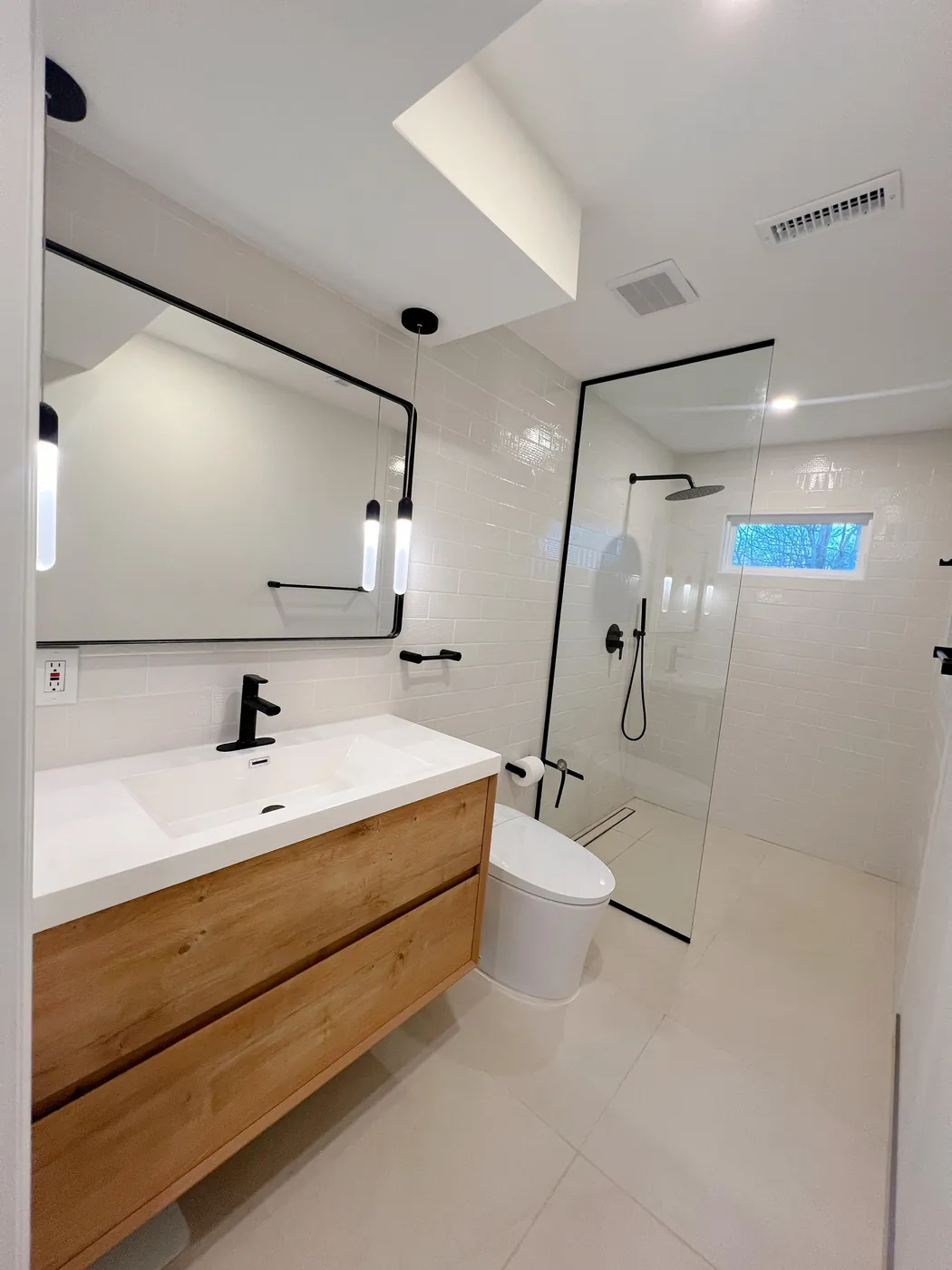
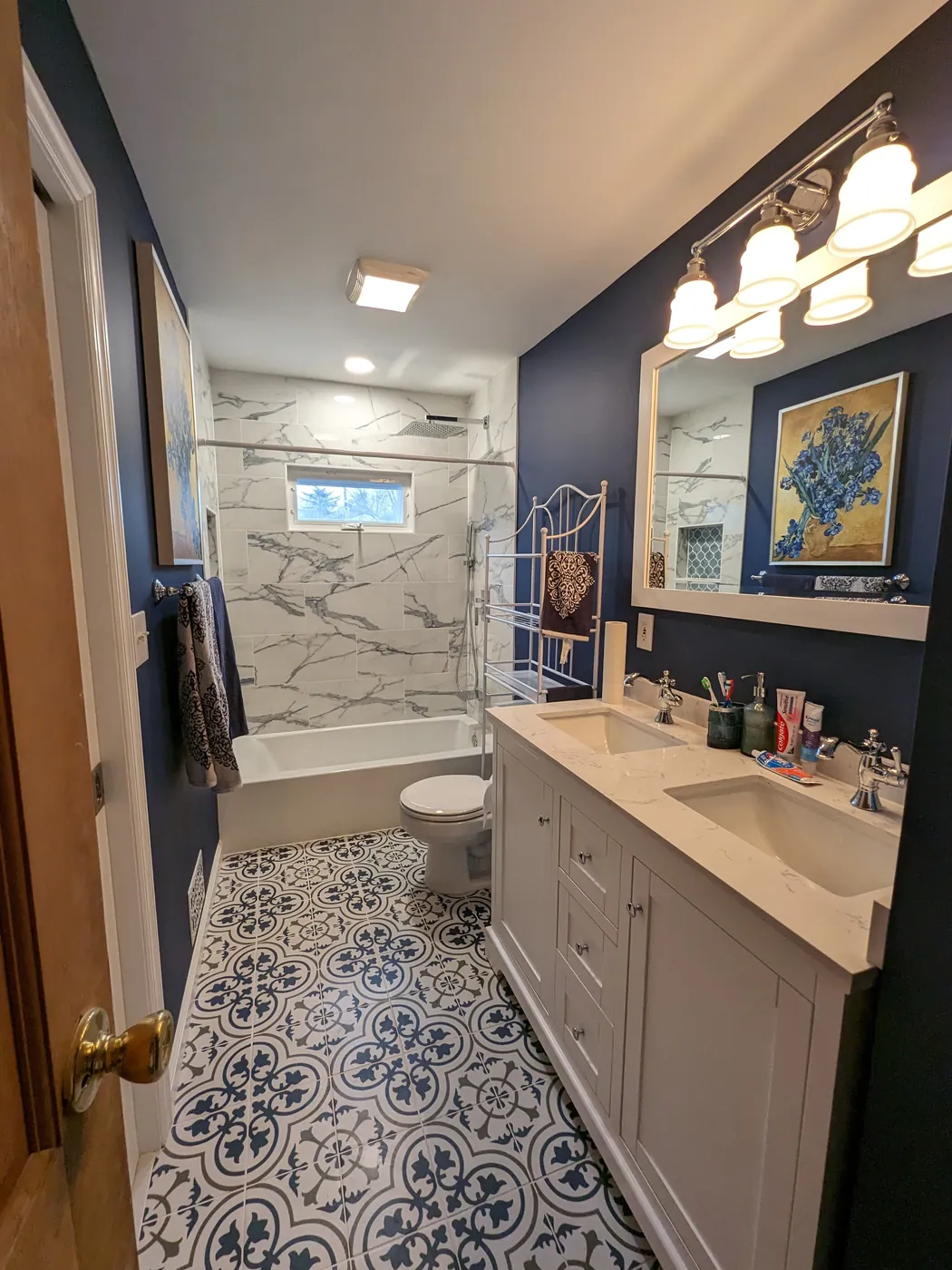
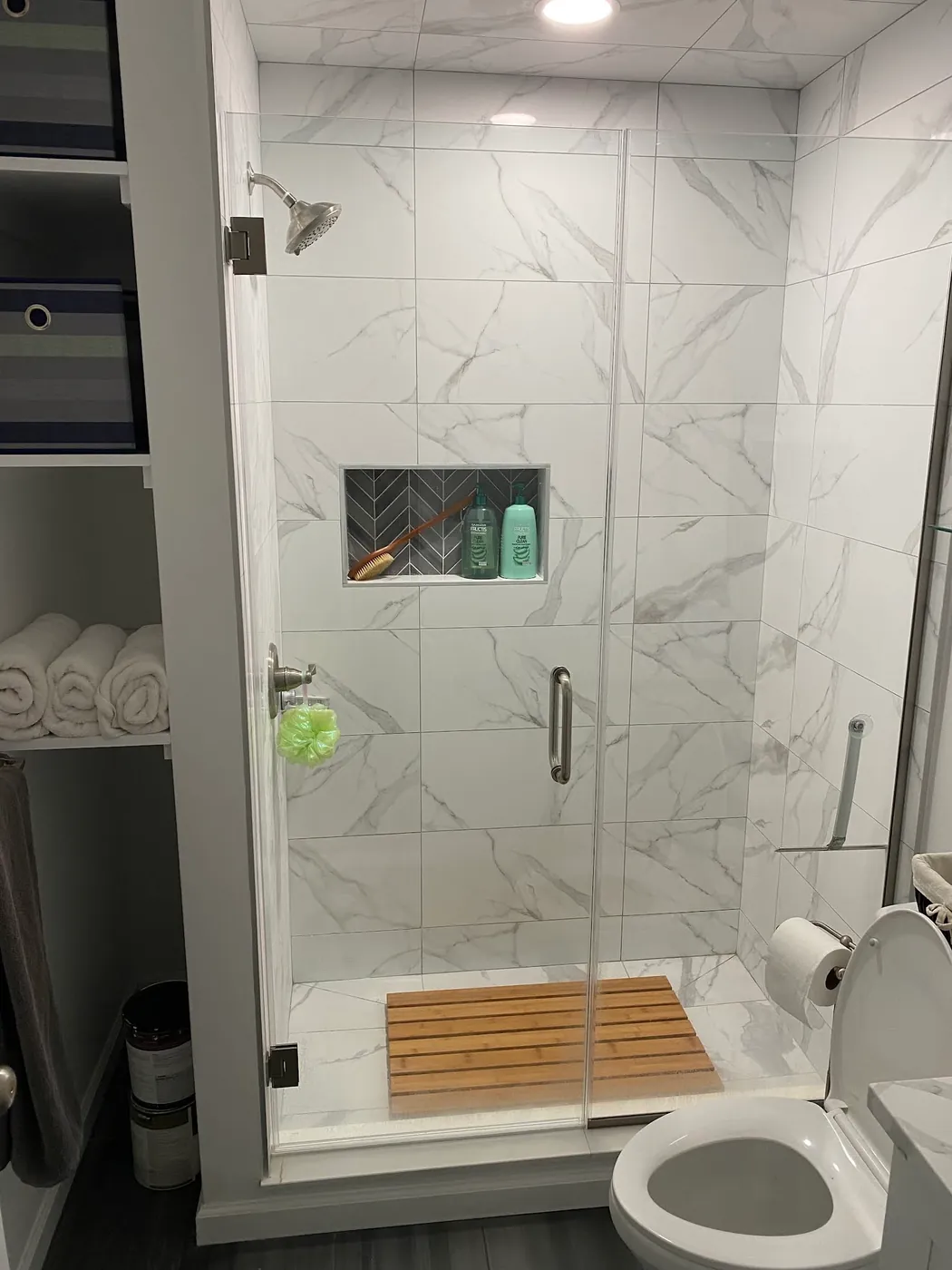
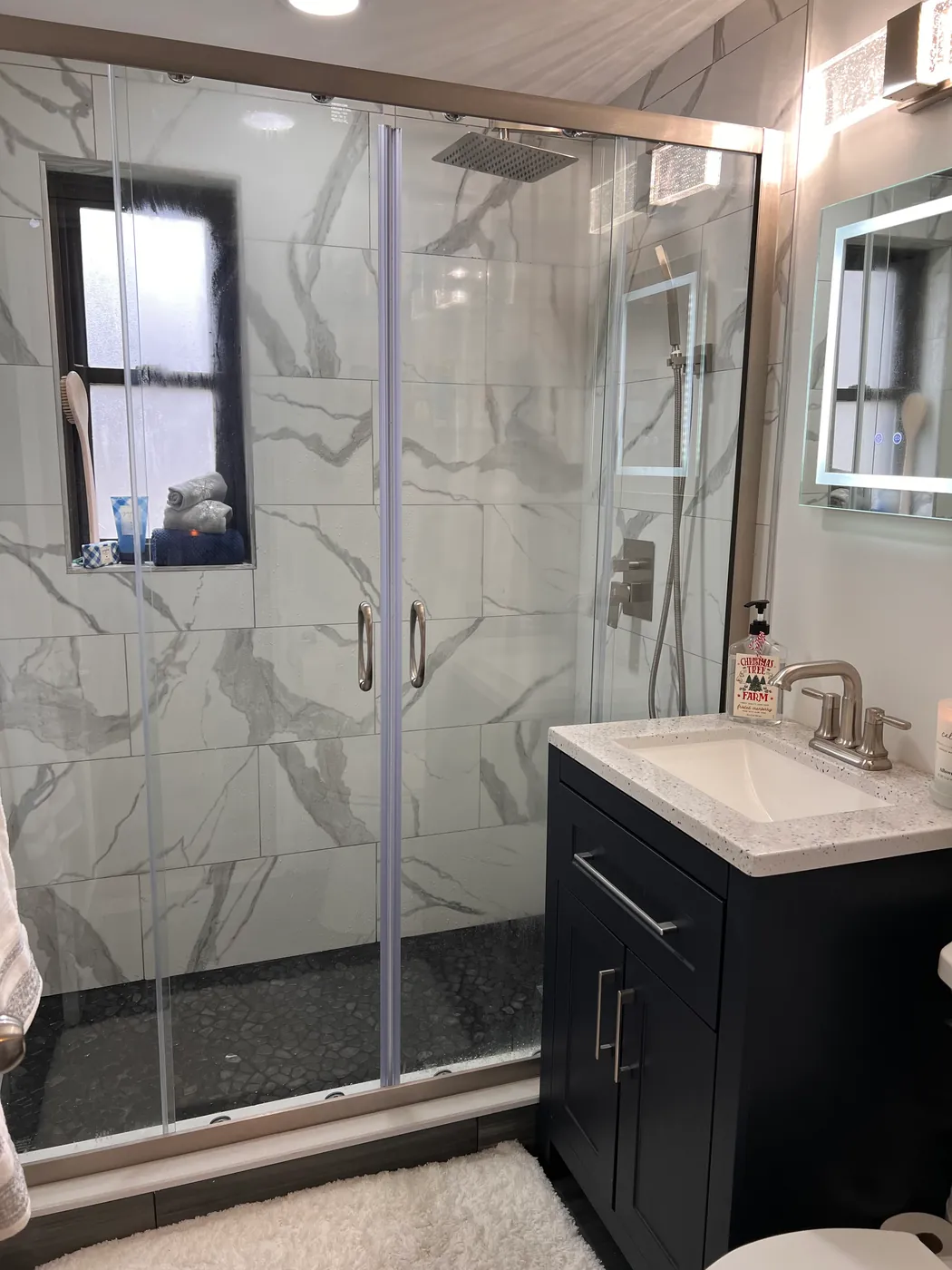
Each photo below was posted by an MG customer with a Google review. None of those reviews name a town, so no location is claimed for these bathrooms.
What Homeowners Say in Their Google Reviews
Each excerpt below is copied exactly from a customer's Google review of a bathroom project, shortened only where an ellipsis appears. MG Builders is rated 4.8 across 90+ Google reviews. Read every review on Google.
“Giovanni, who happens to be the owner, was involved through out the process of installing 2 brand new bathrooms from scratch. … The job was tough and included sewer pipe work through a slab since no basement. The bathrooms came out gorgeous and super high end.”
“When it was time for us to remodel our bathroom, we looked at several companies. We went with MG Builders and couldn't be happier. … Our biggest fear when taking on a project of this magnitude were more problems once the work began but they took care of everything.”
“I recently had MG Builders remodel several bathrooms in my home, including the master bathroom, and the results are stunning. … The shower glass doors completely transformed the space and gave it a modern, upscale feel that makes the entire bathroom feel brand new. Giovanni and his team paid close attention to detail, stayed on schedule, and made sure everything was done to perfection.”
“Worked with MG builders for extending a powder room into full bath. Best service ever. Very professional and the final outcome is better than expectation.”
Bathroom Remodeling in Middlesex County: Frequently Asked Questions
Do I need a permit to remodel a bathroom in Middlesex County?
It depends on what the remodel changes. Painting, new flooring or cabinets, refinishing fixtures, and swapping a faucet, valve or fixture for a similar one without changing the piping arrangement are ordinary maintenance under N.J.A.C. 5:23-2.7, with no permit, notice or inspection. Relocated or added piping, new wiring and structural changes fall outside that list, so they need minor-work notice or a permit from your town's construction office before they begin.
Does Middlesex County or my town handle bathroom permits?
Your town. The county government does not issue building permits. The construction office of the municipality where the home is located receives the notice or permit application and performs any inspections.
Can I replace a toilet or vanity without a permit?
Usually, when the new fixture is similar to the old one and the piping arrangement stays the same. N.J.A.C. 5:23-2.7 lists replacing a fixture with a similar fixture, and installing cabinets, as ordinary maintenance that needs no permit, notice or inspection. Moving the toilet or adding a sink alters the piping, which takes the work outside that list.
Can a powder room become a full bathroom?
It can, if there is space for a shower or tub and the plumbing can serve the new fixtures. Adding fixtures in existing space is minor work under N.J.A.C. 5:23-2.17A only when the water distribution system, water service and house drain need no increase in size; otherwise the work needs a plumbing permit. If the room has to borrow space from next door, moving a wall adds to the scope, and cutting into a load-bearing wall is never ordinary maintenance.
Why does ventilation matter in a bathroom remodel?
Because moisture is what lets mold grow. The EPA advises running the bathroom fan or opening a window while showering and keeping indoor humidity below 60 percent. Swapping an old fan for a new one is ordinary maintenance under the state code only when the fan vents independently to the outdoors, so the remodel is a good time to confirm where the duct actually ends.
Do lead-paint rules apply to a bathroom remodel in an older home?
They can. If the house was built before 1978, the EPA's Renovation, Repair and Painting Rule requires anyone paid to do work that disturbs painted surfaces to be certified and to use lead-safe work practices. The median Middlesex County home was built in 1975, so check your home's construction year and ask any contractor for its EPA firm certification before that work starts.
How long does my town have to act on a bathroom permit application?
Under N.J.A.C. 5:23-2.16, the construction official has 20 business days to approve or deny a permit application, in whole or in part, unless the applicant consents to extend that period. Minor work does not wait for that review: it can begin once notice is given, with the application filed within five business days.
What affects the cost of a bathroom remodel?
The main factors are the size of the room; whether fixtures stay put or move, especially in a house on a slab; the condition of the piping, wiring and framing behind the old finishes; the type of shower or tub and its glass; the tile, vanity, countertop and fixture selections; ventilation and electrical upgrades; and the notice, permits and inspections the scope requires. MG Builders provides a free estimate after seeing the bathroom.
Does MG Builders remodel bathrooms in my Middlesex County town?
MG Builders serves all 25 Middlesex County towns listed on this page, including Edison, where its office is located, as well as Metuchen, Piscataway and Woodbridge. Call (732) 636-3000 to confirm availability for your address.
Middlesex County Towns We Serve
MG Builders serves these 25 Middlesex Countytowns. Permits come from the construction office that serves the property’s municipality.
- Edison, NJ
- Woodbridge, NJ
- Piscataway, NJ
- Old Bridge, NJ
- East Brunswick, NJ
- South Brunswick, NJ
- North Brunswick, NJ
- New Brunswick, NJ
- Perth Amboy, NJ
- Sayreville, NJ
- South Plainfield, NJ
- Metuchen, NJ
- Highland Park, NJ
- Carteret, NJ
- South Amboy, NJ
- South River, NJ
- Middlesex Borough, NJ
- Dunellen, NJ
- Spotswood, NJ
- Milltown, NJ
- Cranbury, NJ
- Helmetta, NJ
- Jamesburg, NJ
- Monroe Township, NJ
- Plainsboro, NJ
Bathroom Remodeling with MG Builders →
The full service overview.
Remodeling in Middlesex County →
Every service MG offers in the county.
Kitchen Remodeling in Middlesex County→
Permits, opening walls, older-home wiring and plumbing, and the questions to ask kitchen contractors in Middlesex County.
Basement Finishing in Middlesex County→
Moisture, radon, permits and egress for finishing a basement in Middlesex County.
Home Additions in Middlesex County→
Zoning, sealed plans, permits and inspections for adding space to a Middlesex County home.
Roofing in Middlesex County→
Repair or replace, permits, storm and tree damage, and what a roofing proposal should cover in Middlesex County.
Bathroom Remodeling in Monmouth County→
Code tiers, flood-area rules, moisture control and older-plumbing questions for a Monmouth County bathroom remodel.
Planning a Bathroom Remodel in Middlesex County?
Call for a free estimate. If you would like to visit our Edison office, call ahead to confirm availability.
(732) 636-3000